You’ve had this same argument a hundred times.
It starts over something small. Twenty minutes later you’re somewhere you’ve both been a hundred times before, saying things you’ll regret, and neither of you can remember how you got there.
After thirty years sitting with couples on the brink, Ray Rivers will tell you plainly: the argument on the surface is almost never the problem. Find what’s underneath it and the arguing stops on its own.
Thirty minutes with Ray himself. No cost, no obligation, and he’ll tell you straight whether he can help.

If more than one of these is true on a normal week, you’re not imagining it.
- You measure your words before you say them. Not because you’re being thoughtful — because you’re calculating what won’t set off the next two hours.
- The silence after is worse than the fight. Nothing gets resolved. It just goes quiet until the next time, and the pile underneath gets a little higher.
- You live like considerate roommates. Logistics, kids, schedules, the house. Everything except the thing you actually need to say.
- You’ve already tried counselling. Someone taught you to use “I” statements. It held for about a week. You left wondering whether you were the problem.
- Something happened that you haven’t come back from. A betrayal, a season of contempt, a line that got crossed. You’re both still here, but neither of you has forgiven it.
- One of you has a foot out the door. Nobody has said the word out loud yet. You’re both aware it’s in the room.
Almost nobody asks for a better relationship. They ask for something smaller and far more specific.
To be able to raise it
To bring up the money, the in-laws, the intimacy — and have it be a conversation instead of a war. To stop rehearsing.
To feel heard once
Not agreed with. Heard. For your partner to be able to say back what you meant and mean it, and for you to be able to do the same for them.
To want to come home
To stop bracing at the door. To sit in the same room in the evening and feel settled rather than careful.
That is the work. Not saving an institution — getting two people back to the point where they can reach each other.
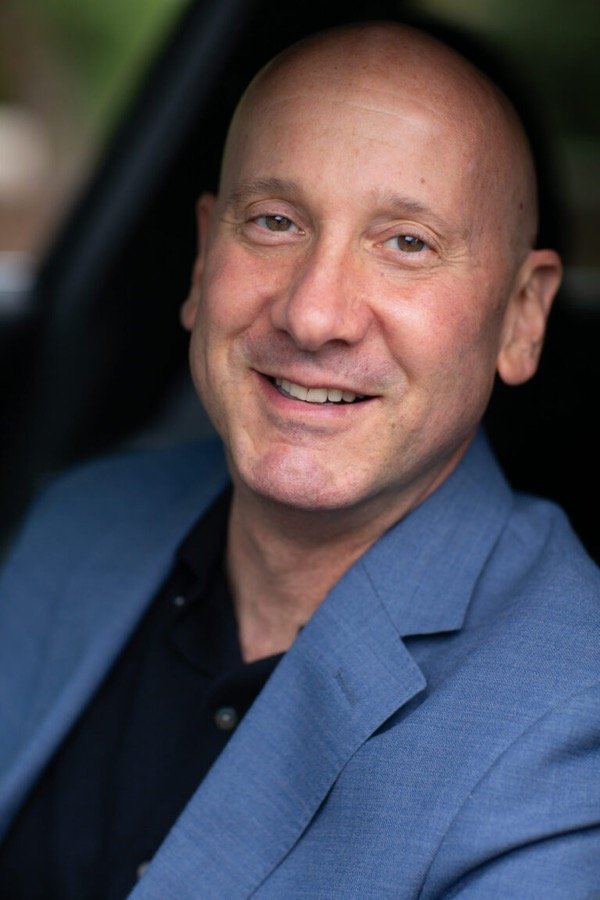
Ray Rivers, LCPC
Licensed psychotherapist · Sufi master teacher
Communication. Consciousness. Connection.
Ray has spent more than thirty years with couples, most of whom arrived convinced they were past saving. He’s been married to his wife Maria for three decades, so he isn’t theorising about any of this.
Clients tend to describe his approach the same way: direct. He won’t spend six months circling. He’ll tell you what he sees, including the parts you were hoping he’d miss, and he’ll be kind about it. What he does isn’t ordinary talk therapy — it blends clinical work, coaching and a contemplative practice that gets underneath the argument to the fear driving it.
He also wrote the book on it, literally: Real Answers For Couples on the Brink.
Three things have to change, and they have to change in this order.
Before you meet, you both complete a deep-dive questionnaire. It isn’t paperwork — it’s the first piece of the work, and it means Ray walks into the first session already knowing the shape of what’s wrong. Most couples say filling it in told them something they hadn’t admitted to themselves.
Communication
First you stop the bleeding. Ray gives you concrete tools — the S.W.I.M. method, the “emotional fire alarm” — for the moment an argument is actually happening, not for a calm Tuesday when you don’t need them.
Consciousness
Then you find out what you’re each actually reacting to. Most recurring fights are two old wounds meeting in the kitchen. Once you can both see the pattern while it’s running, it loses most of its power.
Connection
Then the part you came for. Closeness, warmth, wanting each other’s company again — which returns on its own once it’s safe enough to stop guarding. You leave with a shared picture of what you’re building.
Why this isn’t the therapy you already tried
- Private and self-funded — no insurance, which means no diagnosis on your record and no session cap deciding when you’re finished.
- You work with Ray himself, for a set block of hours, not a rotating clinician for fifty minutes a week.
- Individual sessions as well as joint ones, because some of what needs saying can’t be said in front of your partner yet.
- You get tools, written plans, meditations and reading to use between sessions — the change happens at home, not in the room.
This isn’t a consultation. It’s a programme with a beginning, a middle and an end.
Most people arrive assuming they’re booking a session, or a few. That’s the model everywhere else: you buy an hour, you come back next week, and you keep re-deciding whether to continue until one of you stops booking.
This works the other way round. You commit to a defined block of Ray’s hours, and inside that block he does a complete piece of work — assessment, then the tools, then the underlying pattern, then rebuilding. The couples who get somewhere are almost always the ones who stopped re-deciding every week.
- One consultation, or a handful of loose sessions
- An hour a week, indefinitely, with no end in sight
- You do the talking; the room stays neutral
- Progress measured in how you felt after each session
- You re-decide every week whether to keep paying
- 10 or 20 hours of Ray’s time, agreed up front
- A deep-dive questionnaire completed before you ever meet, which Ray prepares on
- Joint sessions and individual ones — some things can’t be said in front of your partner yet
- A written action plan built for your two specific patterns
- Tools, exercises and reading to use at home, where the change actually happens
- Delivered over weeks or months, scheduled around your lives
Couples who were where you are
100+ reviews · 1,000+ couples
“Ray was a last resort. When we first spoke with him, I expected to be filing for divorce within the year. We’d already seen two other marriage therapists. Ray spent nearly two hours on our consultation alone, and had a completely different approach to anyone we’d seen before. Ray gave us both hope for the future again.”
“Our previous therapist told us to give up on our relationship, that it was unfixable. Once we saw Ray we quickly realised he didn’t just put a band aid on our problems, he went straight to the root. He is wise, spiritual, funny, real, honest and authentic.”
“Couples therapy was a last ditch effort just to be able to say ‘I tried.’ My mindset was absolutely stuck on ‘I don’t need help, she does.’ But Ray somehow got through. He was truly the spark that ignited a change in my life, my mindset, and our relationship.”
“My first thought was who is this white Dude who ain’t been married as long as me gonna help me. I’m a proud Black Man and I can honestly say that he has helped me become a better husband and a better man. I’ve been married for over 45 years. Long and short Ray is worth it!!”
Two ways to do this. The difference is how much of Ray’s time you get.
Both are complete programmes rather than sessions you buy one at a time, because the couples who get somewhere are the ones who commit to a block of work instead of re-deciding every week whether to keep going.
The GOLD Programme
$3,000
Minimum 10 hours of Ray’s personal time
- The proprietary deep-dive questionnaire, with Ray’s prep on your answers
- Both joint sessions and individual sessions
- A customised action plan built for your two specific patterns
- Tools, exercises, guided meditations and reading between sessions
The PLATINUM Programme
Most in-depth$5,000
Minimum 20 hours of Ray’s personal time
- Everything in Gold, with double the hours
- Extended prep time on your questionnaire before you begin
- Longer intensive sessions rather than the standard hour, so a breakthrough isn’t cut off by the clock
- Priority scheduling — useful when things are actively coming apart
This work is private and self-funded. Ray doesn’t bill insurance or flex health accounts — that’s what keeps the programme free of session limits, diagnostic coding and anything on your medical record.
The questions couples actually ask Ray first
What actually happens on the call?
Thirty minutes with Ray, not an assistant. You tell him what’s going on, he asks a few questions, and he tells you plainly whether this is work he can help with. If it isn’t, he’ll say so and point you somewhere better. There is no pitch and nothing to decide on the call.
My partner won’t agree to this.
Common, and not automatically a dead end. Plenty of couples start with one person who is willing and one who is deeply sceptical — more than one review on this page was written by the sceptic. Say so on the call and Ray will tell you honestly whether there’s enough to work with, or whether the more useful first step is individual work with you.
We’ve already done counselling and it didn’t help.
That’s the most common thing Ray hears. Usually what happened is that you got communication techniques without ever getting to the thing underneath, so the techniques held for a week and then the old pattern reasserted itself. This programme works in the other order: what’s driving it first, then the tools.
Is $3,000 to $5,000 really what this costs?
Yes, and it’s stated here rather than saved for a sales call so you can decide in your own time. It buys a defined block of Ray’s personal hours, not a subscription. For scale, contested divorces in Maryland routinely run several times that. If it isn’t workable right now, start with the free material instead — Ray would rather point you there than have you stretch.
Do we have to be in Maryland?
No. Ray sees couples in person at the Columbia office and works with couples across the country by video. The programme is the same either way.
How fast does anything change?
Most couples notice the arguments getting shorter and less frightening within the first few weeks, because that’s what the early tools are for. The deeper pattern takes the length of the programme. Anyone promising you a fixed timetable on a marriage is guessing.
Is what we say confidential?
Yes. Ray is a licensed clinical professional counsellor and holds to the confidentiality obligations that come with the licence, in individual sessions as well as joint ones.
What if we’re not sure we want to stay together?
Then that’s the honest starting point, and it’s a legitimate one. Ray’s job isn’t to keep every marriage intact at any cost — it’s to get you both to a place where you can see clearly and decide on purpose rather than by attrition.
One thing that isn’t couples work. If anyone in your home is afraid for their physical safety, this programme is not the right place to start — and joint sessions can make some situations more dangerous rather than less. Here is where to start instead, or call the National Domestic Violence Hotline free on 1-800-799-7233.
What happens once you commit
- The questionnaire arrives. You each complete it separately. It goes deeper than intake paperwork, and most couples find it surfaces something on its own before they ever sit down with Ray.
- Ray prepares. He reads both sets of answers before you meet, which is why the first session starts somewhere useful instead of at the beginning.
- You begin. Joint sessions and individual ones, in Columbia or by video, scheduled around your lives rather than a fixed weekly slot.
- You work between sessions. Written plans, tools and practices. The change happens at home; the sessions are where you course-correct.
Ready to start, or want to check you’re a good fit first?
Both are fine, and neither is the “right” one. If you already know this is what you need, enrol and Ray’s office will be in touch within a business day. If you’d rather speak to him first, the call below is free and he’ll tell you honestly whether he can help — including when the answer is no.
Book a free 30-minute call
Thirty minutes with Ray himself. Nothing to decide on the call.
Everything you say is confidential. Calendar not loading? Open it in a new tab — or call the office on (301) 220-6955.